A finish is not really finished until it has lived through a few winters. Some materials look their best on installation day and then begin a slow decline. Others look slightly stiff and new, then quietly improve for years, gathering the marks of an actual life.
We call this the patina test, and it is the first question we ask of any surface: what will this look like after a busy household has been kind to it, and occasionally careless?
Choose materials that can be repaired
The most sustainable and most economical surfaces share one quality: they can be brought back. Solid timber can be sanded and refinished. Stone can be honed and re-polished. Tile can be re-grouted. Brass can be cleaned or left to darken. Laminate, by contrast, cannot be repaired — only replaced.
When we specify a finish, we ask how it will be maintained in ten years, not just how it will look next month. A surface you can rescue is a surface you will keep.
Let honest surfaces do less work
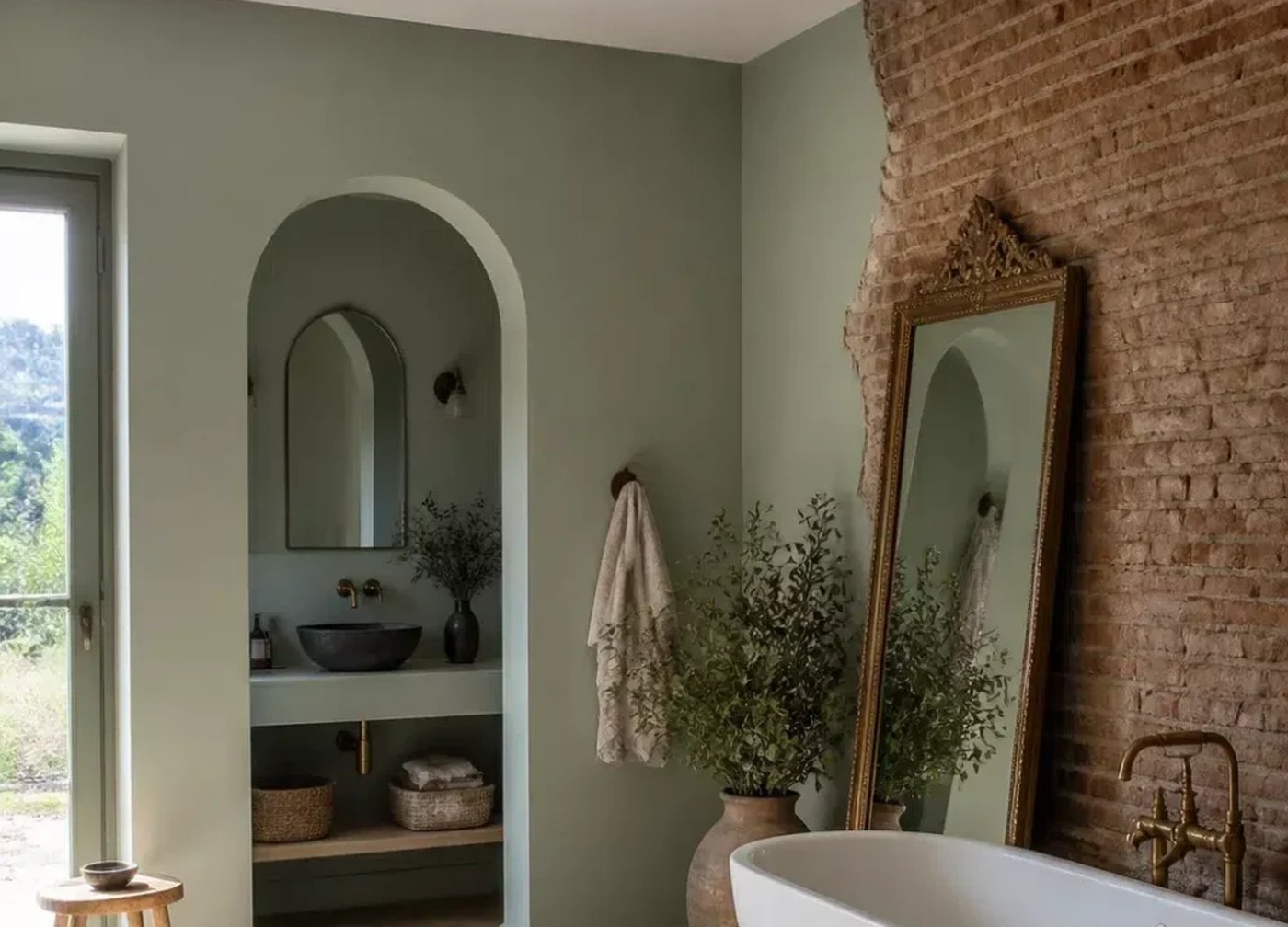
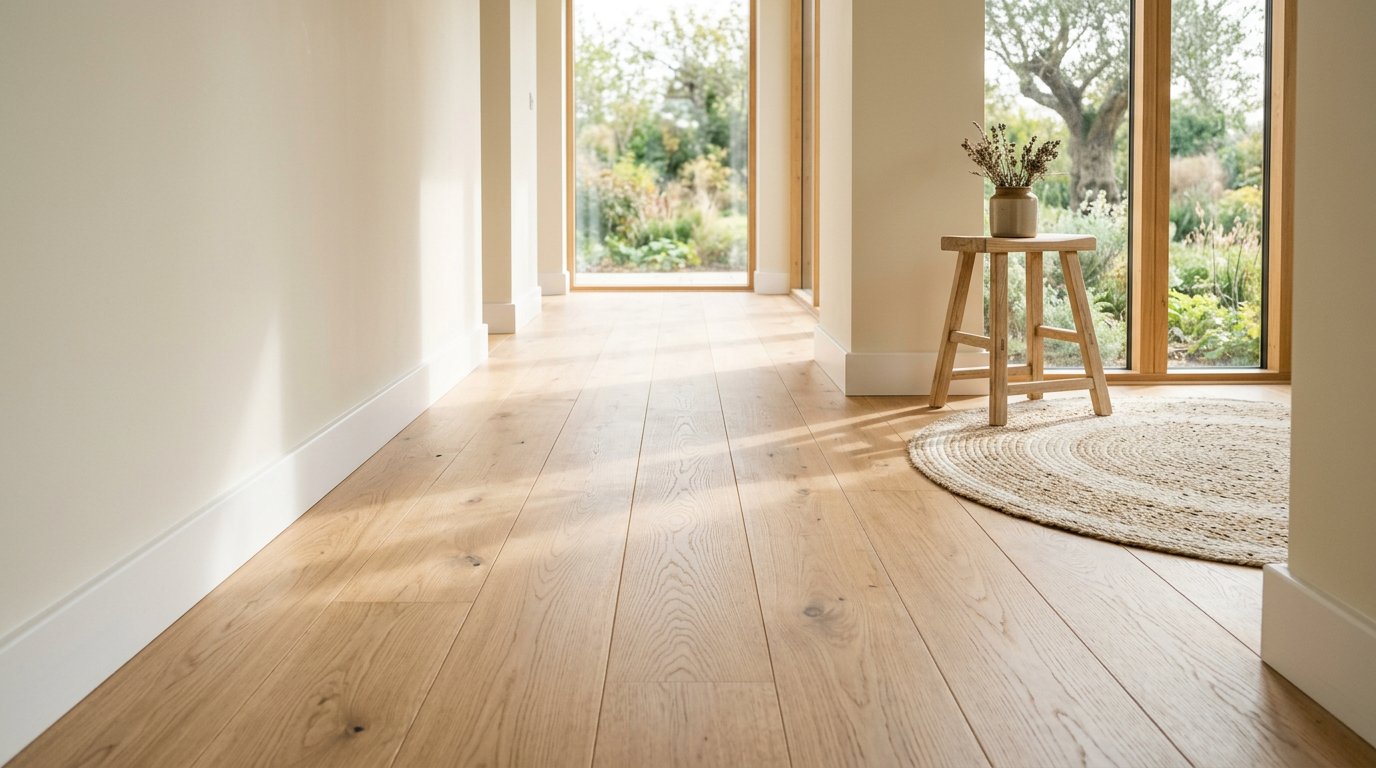
Materials that show their nature tend to age well: solid wood with visible grain, tile with slight variation, limewash with depth, stone with movement. The variation is not a flaw to be corrected — it is what prevents a large surface from looking printed.
There is a practical benefit too. Surfaces with natural variation hide daily life far better than perfectly uniform ones. The first scratch on a flawless gloss finish is an event. On a grained oak board, it is simply another line.
Think about your climate, honestly
In Vermont, materials meet real seasonal movement, humidity swings and long heating seasons. Timber expands and contracts. Tile and stone feel cold underfoot unless paired with a warm floor. Certain finishes need more ventilation than a closed house provides in winter.
We choose materials for the way this climate behaves, not for a showroom in a mild place. That means engineered timber where stability matters, generous expansion gaps, vapour-aware assemblies and finishes that tolerate a dry interior without cracking.
Mind the maintenance you will actually do
Every material has an instruction manual, whether or not anyone reads it. Oiled wood needs periodic re-oiling. Unsealed stone can stain. White grout in a busy hallway is a commitment. Choose the level of upkeep that matches the household, not the ideal of one.
We would rather specify a slightly less dramatic finish that gets cared for than a showstopper that quietly deteriorates. Honest choices last longer than aspirational ones.
Use one accent well
Restraint is a material strategy. A single distinctive element — a stone worktop, a ribbed timber island, a brass tap — reads as deliberate. Several competing statements in one room read as noise, and noise dates quickly.
Let the quiet materials do the structural work: consistent floors, calm walls, simple trim. Then spend the attention on the one surface you want to touch every day.
Live with samples before you commit
Photographs lie about scale, and screens lie about colour. Bring samples home, tape them in place and watch them through the day. A stone that looks warm at noon can look grey in the evening; a tile that seems calm in isolation can dominate once multiplied across a wall.
We send clients home with a materials board for exactly this reason. The decision that feels slow at the time is the one that stops feeling like a compromise months later.
Beauty that keeps its composure
Beautiful ageing is not accidental. It is the result of honest materials, repairable surfaces, sensible detailing and a realistic view of the household living among them. Choose for the life the room will actually have, and it will reward you long after the photographs have faded from memory.